
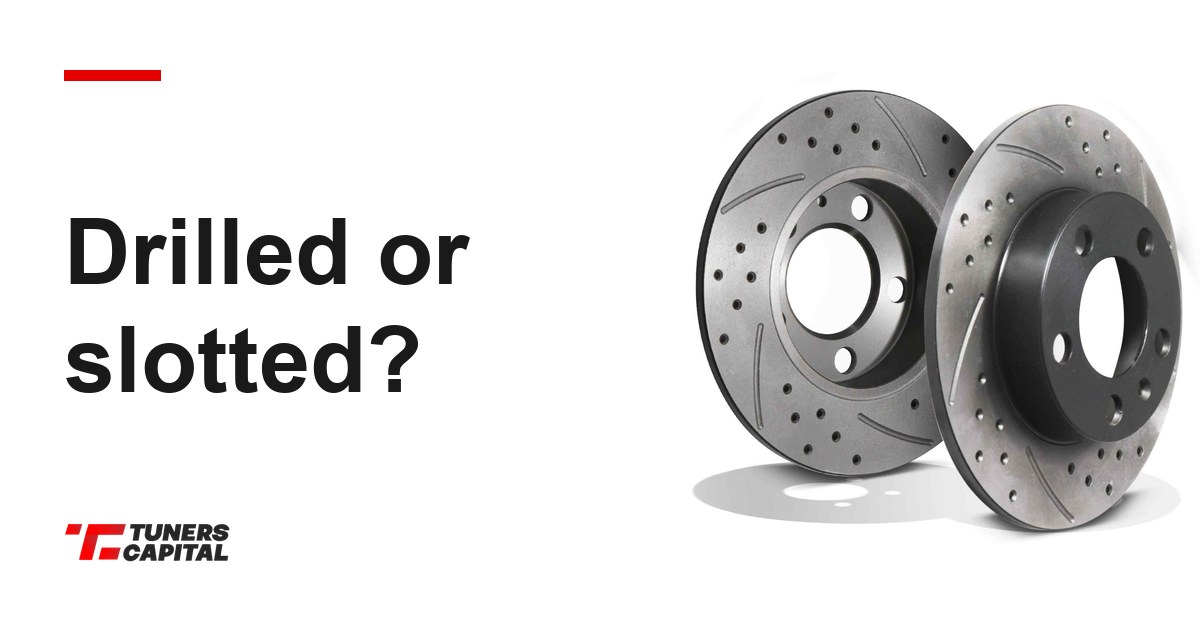
When it comes to modifying a car, most people first think of more engine power or fitting sports suspension. But every experienced driver knows a car is only as fast as it can stop. The brake system is your car’s most important safety component. If you have decided for a brake upgrade, you have probably run into the eternal dilemma: drilled, slotted or maybe drilled-and-slotted discs?
Although both look fantastic on a car and emphasise its sporty character, how they work and what they are for differ considerably. In this article we bust the myths and help you choose the right solution for your driving style.
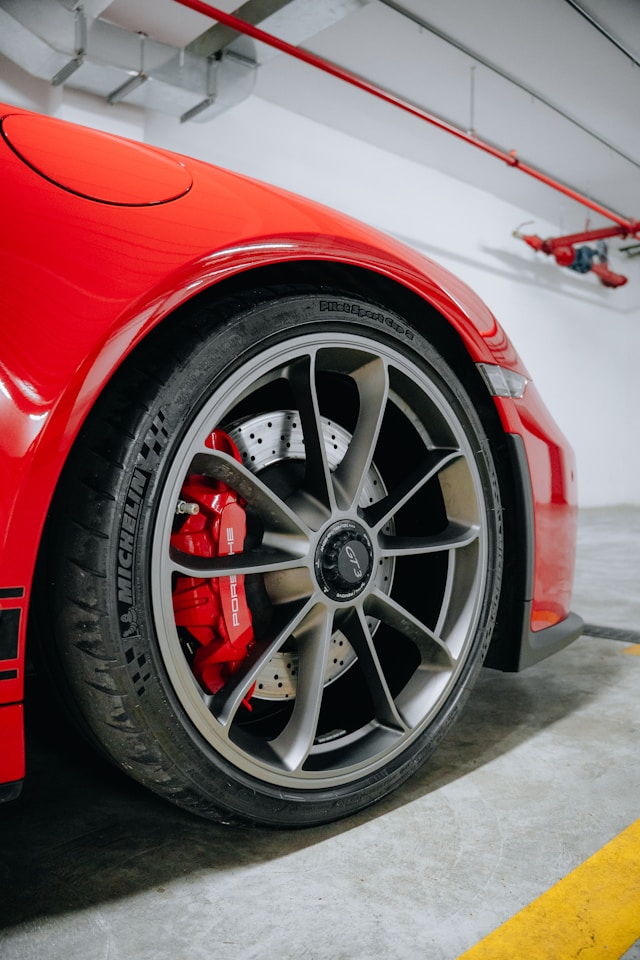
Why do brakes lose the plot, and what do gases and heat have to do with it?
To understand the difference between discs, we first have to understand what happens when you brake. When you press the pedal for the brake, the calipers squeeze the pads against the spinning disc. That friction turns kinetic energy into an enormous amount of heat.
Under hard braking the pad material gets very hot and starts releasing gases and brake dust. If those gases have nowhere to escape, they form a thin, invisible cushion between pad and disc. This phenomenon is called fade or brake fade – the pedal goes soft and, despite hard pressure, the car no longer stops as effectively. Solving exactly that problem is the main job of holes and slots.
Drilled brake discs: Looks and effective cooling
As the name suggests, drilled discs have holes through the face that reach the internal cooling vanes.
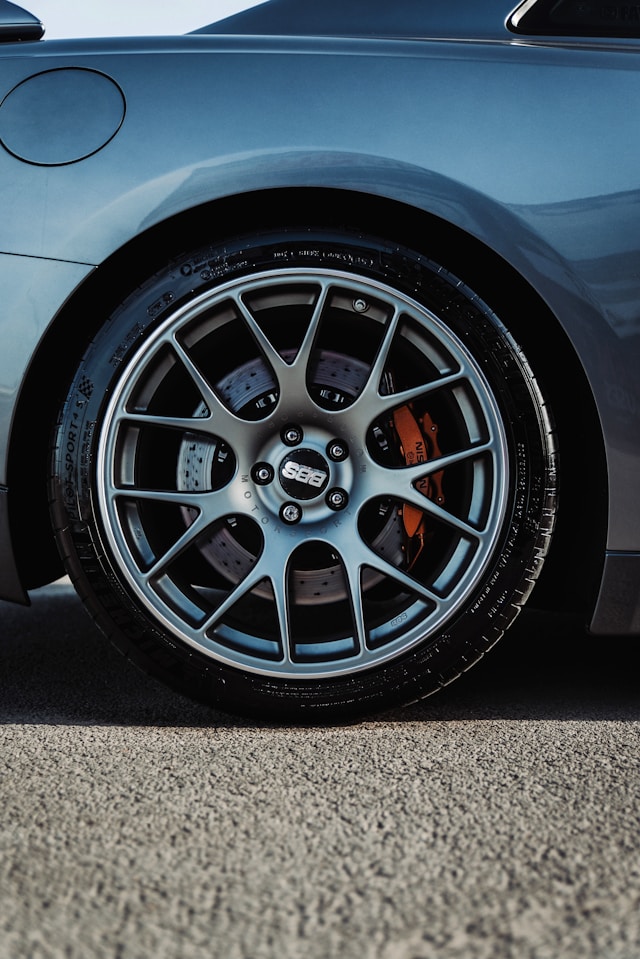
How do they work? The holes act as ventilation channels. They let heat, gases and water escape quickly and effectively from under the pad. In wet weather especially, drilled discs are extremely effective, as the holes clear water from the surface immediately and give instant bite.
Who are they for? Drilled discs are an excellent choice for everyday driving, occasional spirited driving on twisty roads and anyone who wants top-class looks (you see them most often on prestige sports cars).
Downside: Under extreme racing loads, where discs glow red hot and cool quickly, micro-cracks can form around the holes because the material’s structural integrity is weakened. That is why they are not the best choice for heavy loads on track.
Slotted brake discs: Uncompromising performance
Slotted discs have no holes; instead, shallow channels (slots) are cut into the face, running from the centre towards the outer edge.
How do they work? The slots are not so much for ventilation (cooling) as they act like a scraper. As the pad passes over a slot, it shaves off the glazed (burnt) layer of material from the pad. At the same time the slots create a path that immediately expels gases and dust from under the pad. The result is consistent, extremely aggressive brake bite regardless of temperature. As the disc is not drilled, it keeps its full mass and structural strength, so it does not crack.
Who are they for? Slotted discs are the ultimate choice for track day enthusiasts, racers, heavy off-road vehicles and anyone who often tows heavy trailers. They are extremely robust and made for abuse at high temperatures.
Downside: As the slots constantly wipe the pads, they wear faster than on plain or drilled discs. They can also make slightly more noise or hum under hard braking, though that rarely bothers real enthusiasts.
The verdict: So which discs should you choose?
Your decision should be based on how you actually use your car:
- If the car is your daily driverthat you like to push over a mountain pass, while also caring about looks and reliable braking in the rain, choose drilled brake discs.
- If you regularly work the car on track (track days) or have a very heavy car that quickly overheats the factory brakes, there is nothing to think about slotted brake discs are your best and safest option.
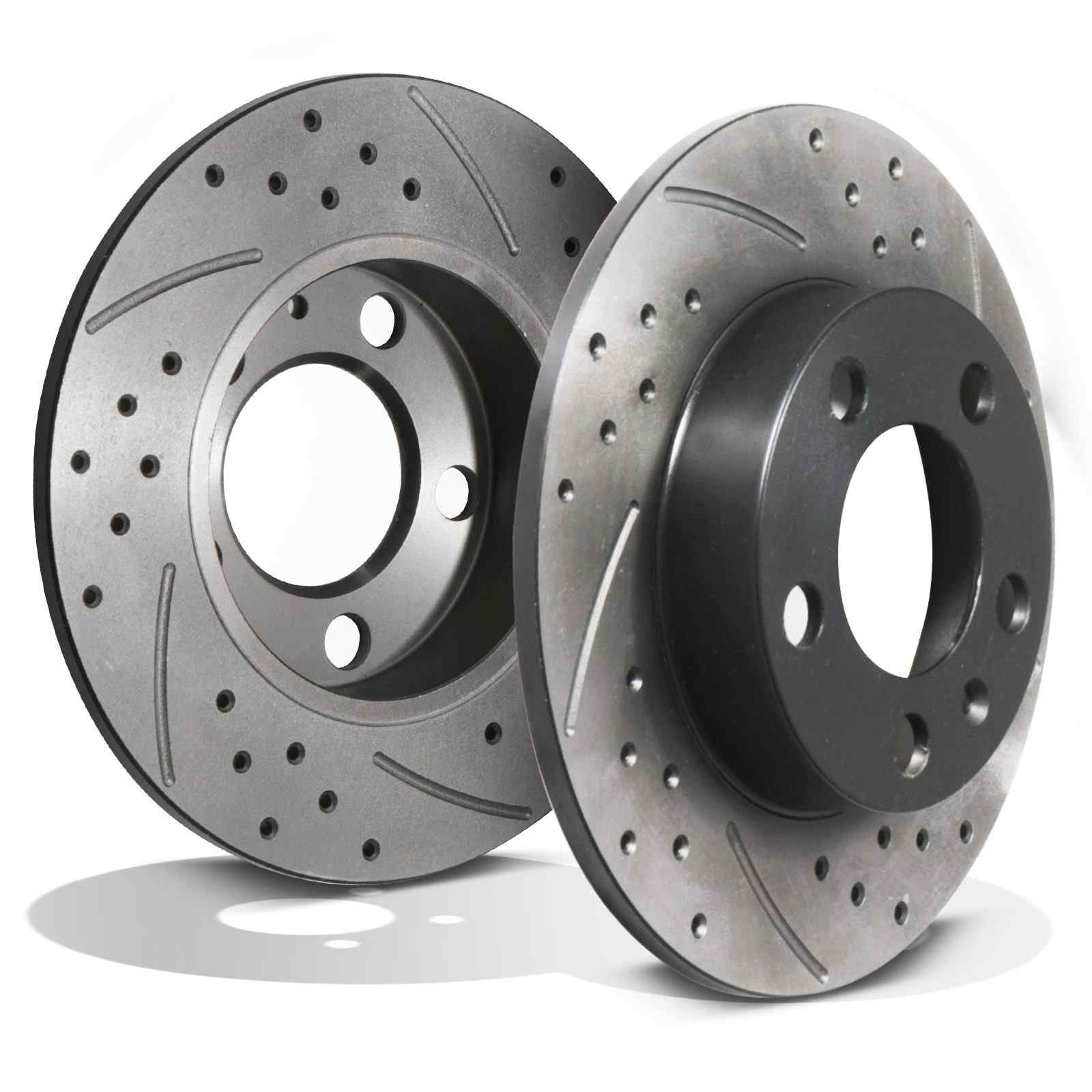
There are also drilled-and-slotted discs on the market that try to combine the best of both worlds, but they share the advantages and disadvantages of both designs (excellent bite and cooling, but still the risk for cracks under extreme use).
Whatever for option you go for, check our top-class range in the category Brake discs, where you will find solutions from respected global manufacturers for all cars.
P.S. Ne pozabite! Even the best performance discs and pads will not help if your brake fluid has not been changed for years. Old fluid absorbs moisture and its boiling point drops drastically, which quickly leads to brake failure under heavy loads. So whenever you change the discs, also take care for to change the brake fluid!
If you haven’t already, you can sign up for our newsletter using the form below. You can expect more articles like this in your inbox, plus other news from the car world, such as upcoming car meets, track days and other events.