TUNING GUIDE - GOLF 8 GTI / R (EA888 GEN 4)
Tuning guide for upgrading the VAG EA888 Gen 4 engine (2.0 TSI evo4) - VW Golf 8 GTI, Clubsport and R, Audi S3 8Y, Cupra Leon and Formentor, Škoda Octavia RS NX.
Tuning guide
This guide is your one-stop shop for all
The Golf 8 GTI, Clubsport and R and their cousins – the Audi S3 8Y, Cupra Leon, Formentor and Octavia RS NX – have the fourth generation of the EA888 engine (evo4) under the bonnet. The block and head are essentially the same as the proven Gen3, so the platform responds just as well for upgrades – with two differences you need to know about: every European Gen4 has a particulate filter (OPF) as standard and a locked ECU, which for a remap requires unlocking. In this guide we work through the stages from 245 to more than 500 horsepower, then through suspension and brakes, because power without grip is worth nothing. If you have a Golf 7 or another Gen3, there is for you the EA888 Gen3 guide.
Example cars:
- VW Golf 8 GTI / GTI Clubsport / R (CD1, also facelift 2024)
- Audi S3 8Y / A3 40 TFSI 8Y
- Cupra Leon KL 245–300 / Formentor 245–310 / Ateca 300
- Škoda Octavia RS NX / Kodiaq RS 2.0 TSI
- VW Tiguan R, Arteon R, T-Roc R
Production dates: from 2020 onwards
Engine codes: DNPA (245 HP), DNFC (300 HP), DNUE (310 HP), DNFG (320 HP) and related evo4 versions
Kazalo
300-400 hp
Stage 1
Factory figures: GTI 245 HP / 370 Nm with the IS20 turbo, Clubsport 300 HP and R 320 HP (R 20 Years 333 HP) with the larger IS38. The 2024 facelift added 20 HP to the GTI and 13 HP to the R. All of it is conservatively set up from the factory – which is why Stage 1 is the best money-per-horsepower you will ever spend.
Power gain: +50–80 hp
Final power: GTI 300–320 hp, Clubsport and R 380–400 hp
Recommended upgrades:
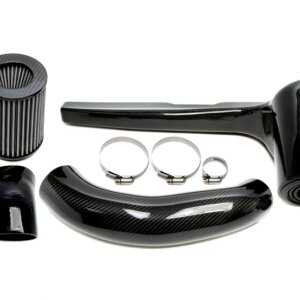
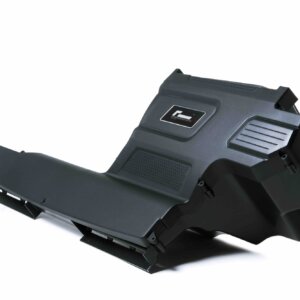
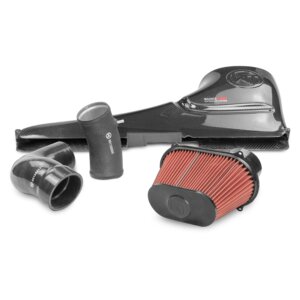
Intake system: on the Gen4 the factory filter housing is made for quietness. An open intake with a cone filter brings better flow, sharper throttle response and an audible turbo intake note – at Stage 1 that is mainly feel and sound, while at Stage 2 the IS38 actually needs it.
Turbo muffler delete: an aluminium cover replaces the factory muffler on the turbo outlet – a little more flow, more noise when the blow-off valve opens, and the cheapest step.
Engine software remap: on the Gen4 the ECU is locked (tuning protection), so a remap is no longer a five-minute job over OBD – the ECU has to be unlocked (bench/unlock) or replaced. We can sort this in a single visit; for a remap (chip tuning) of your car, contact. We build custom Stage 1, Stage 2 and Stage X maps.
Extra tips:
Fuel: Stage 1 maps are written for 98 or 100 oktanov. With 95 you get less power and more risk for knock.
DSG: the DQ381 handles Stage 1 without trouble. At Stage 2 and beyond we recommend a DSG remap – faster shifts, a higher clutch limit and launch control without restrictions.
➤ Our Tuners Capital line
We recommend: TC intake system for the Gen4
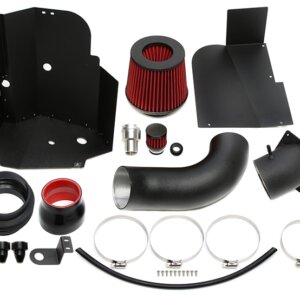
For the Gen4 we have two in-house solutions, both made for 245–333 hp (GTI, Clubsport, R, S3 8Y, Cupra Leon, Octavia RS). TC intake kit with a cone filter and intake pipe is the most affordable route to flow and sound. The TC carbon intake has the same fitment but a carbon pipe and housing: the intake air stays cooler than in aluminium or plastic, and the engine bay gets a look you won’t want to hide under the bonnet. Both fit without cutting.
-
532,00 € – 581,00 €Price range: 532,00 € through 581,00 € Select options This product has multiple variants. The options may be chosen on the product page
350-450 hp
Stage 2
The second stage extracts everything the factory turbo can give. On the GTI the IS20 tops out at around 340–360 HP; on the Clubsport and R the IS38 manages 420–450 HP. This is what decides whether the car is powerful only on paper or still after three pulls in a row.
Power gain: +100–130 hp
Final power: GTI 340–360 hp, Clubsport and R 420–450 hp
Recommended upgrades:
The Stage 1 upgrades mentioned above: intake system, turbo muffler delete, remap.
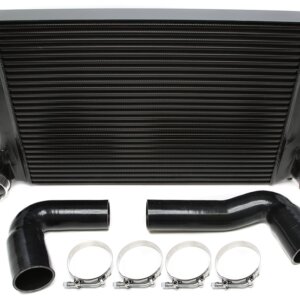
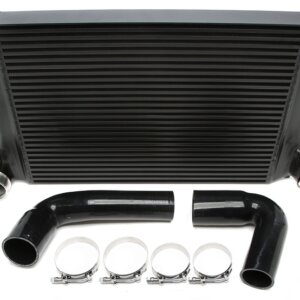
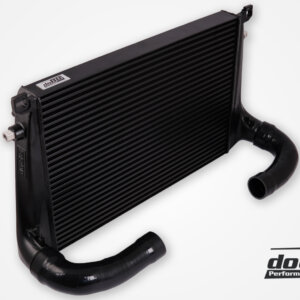
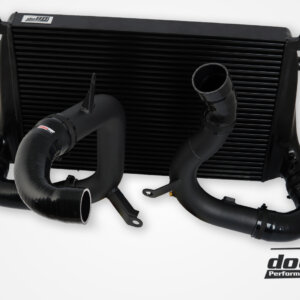
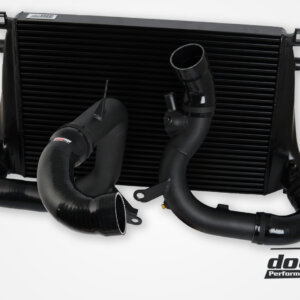
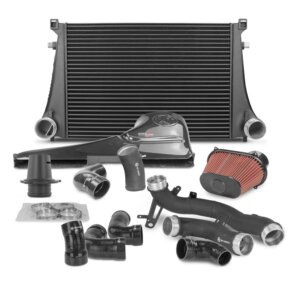
Intercooler: after two or three hard pulls the factory Gen4 intercooler heat-soaks, the ECU sees excessive intake air temperature and pulls timing – power drops for 20–40 HP until it cools down. A larger core prevents this and is mandatory at Stage 2, not optional.
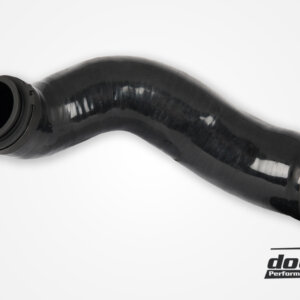
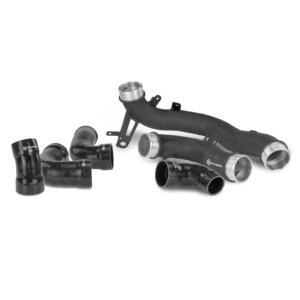
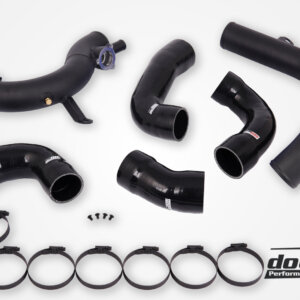
Charge pipes: the factory plastic pipes between the turbo, intercooler and intake manifold expand and leak at higher boost. Aluminium or silicone ones seal properly and are ready for a hybrid turbo.
➤ Our Tuners Capital line
We recommend: TC intercooler for Gen4
At Stage 2 the intercooler is the heart of the upgrade, so we developed our own. TC intercooler 630×440×60 mm fits the factory mounting points and factory pipes – the simplest installation, enough for all the way to 450 HP. The 630×440×70 mm version has a thicker core and more surface area for heat dissipation; choose it if you are already planning a hybrid turbo or regular track days. Both fit the GTI, Clubsport, R, S3 8Y, Cupra Leon/Formentor, Octavia RS and Arteon R.
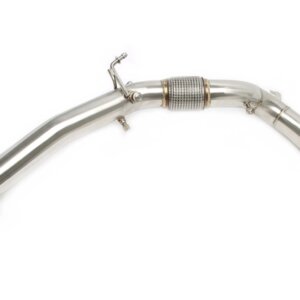
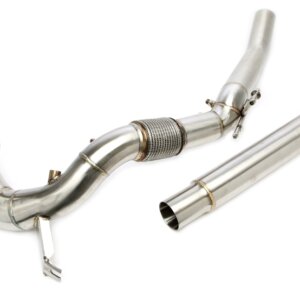
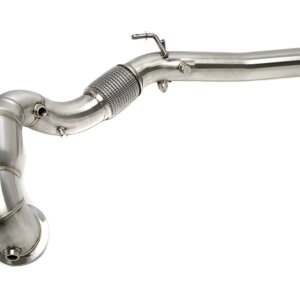
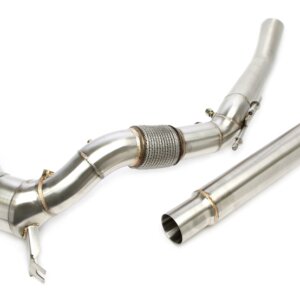
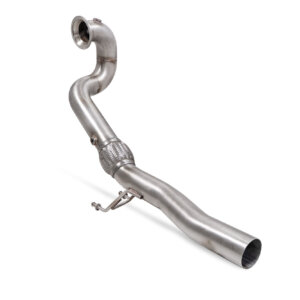
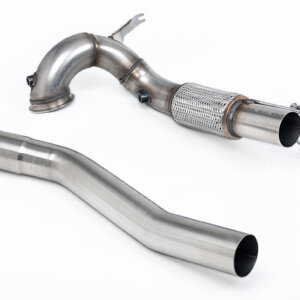
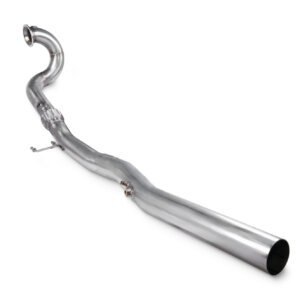
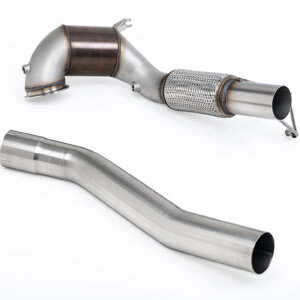
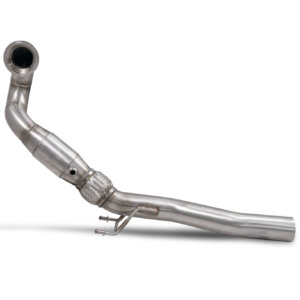
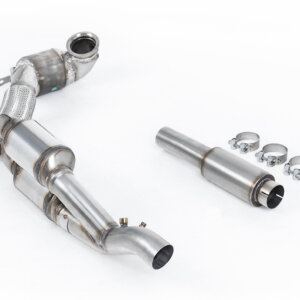
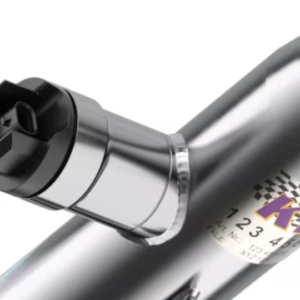
Downpipe: on the Gen4 there are for the turbo, the catalytic converter and the OPF. The downpipe replaces the catalytic converter section and keeps the space for the factory OPF (“with OPF”), so installation is clean and requires no cutting. Available in two versions: without a catalytic converter (maximum flow, only for the track) and with a 200-cell sports catalytic converter (no smell, no lambda sensor fault after the remap). Take care when choosing: the GTI, Clubsport and Octavia RS are front-wheel drive and take the one-piece downpipe, while the R, S3 and 4Drive versions need the two-piece version because of the driveshaft.
➤ Our Tuners Capital line
We recommend: TC downpipe for Gen4
Four stainless steel downpipes, 3″ / 76 mm, all keeping the OPF, with connections for the factory sensors. Without a catalytic converter for front-wheel drive (GTI, Clubsport, Octavia RS, Formentor) and two-piece, without a catalytic converter for quattro/4Motion (R, S3 8Y, Leon/Formentor 4Drive) the choice is for the track. For the road we recommend the version with a 200-cell sports catalytic converter and flex pipe flow close to a decat, without the smell and without vibration – or a sports catalytic converter for quattro/4Motion. Milltek and Scorpion are in the grid below; the Milltek HJS has ECE approval.
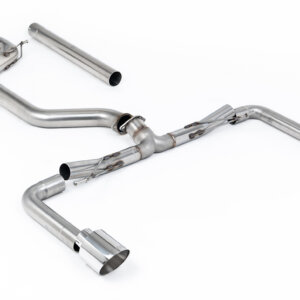
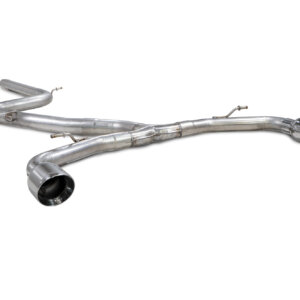
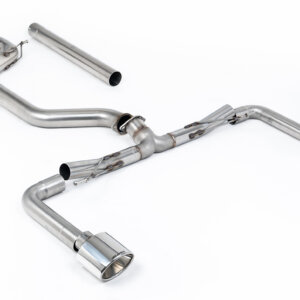
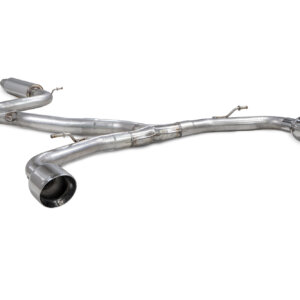
Exhaust (GPF-back): on the Gen4 the exhaust system starts for the particulate filter, which is why it is called GPF-back. The standard Golf 8 GTI is very quiet, and most of the R’s sound comes from the speakers. The resonated GPF-back gives a deep, refined tone with no drone at 120 km/h; the non-resonated version is louder and sharper. The Scorpion with electronic valves keeps two faces – quiet in Comfort, loud in Race. The Milltek with ECE approval is the choice for those who don’t want trouble at the technical inspection.
Engine software remap: adapting the ECU to the new components – a decat downpipe requires the second lambda sensor diagnostics to be switched off, while the intercooler and intake change the temperature and flow models. For a remap (chip tuning) of your car, contact. We build custom Stage 1, Stage 2 and Stage X maps.
Extra tips:
The turbo has its limit: on the GTI the IS20 is at its limit above 350 HP, and so is the IS38 above 450 HP. If you want more, this is the moment for a hybrid turbo, not for a more aggressive map.
DSG and clutch: the DQ381 has a factory limit of around 500 Nm. At Stage 2 on the R you are there – a DSG remap is mandatory, and we can supply uprated clutches to order. On the manual GTI the factory clutch starts slipping above 420 Nm.
450-550 hp
Stage 3
This is where the fun starts – Stage 3 means a hybrid turbo in the factory housing (an IS38 with a larger wheel, or IS38+ / 500+ type versions) and everything that keeps it alive. The factory Gen4 fuel system with 350-bar injection holds up to around 500 HP on petrol, for more you need a high-pressure pump upgrade or ethanol fuel.
Power gain: +150–250 hp
Final power: 450–550 hp
Recommended upgrades:
Hybrid turbo: we supply it to order, depending on the goal (road, drag, track) and gearbox.
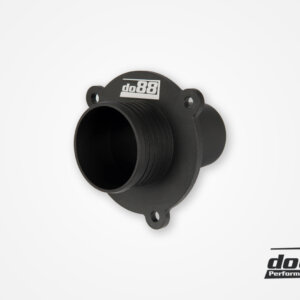
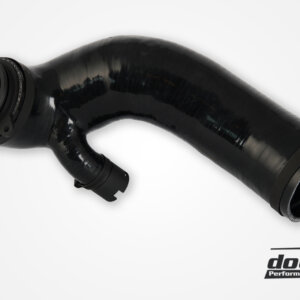
Turbo inlet (turbo intake pipe): with a hybrid turbo the factory plastic pipe before the turbo is a bottleneck. An aluminium or silicone one of larger diameter is mandatory.
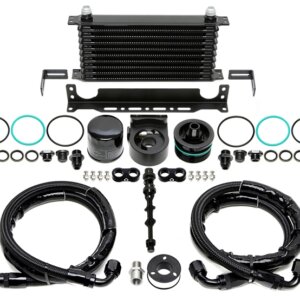
Oil cooler: with more boost and more revs, oil temperature quickly passes 120 °C, and the factory oil/water heat exchanger also heats the coolant. A separate air-to-oil cooler takes the load off the whole system.
A larger intercooler and charge pipes: if you did not fit them at Stage 2, now there is no choice.
➤ Our Tuners Capital line
We recommend: TC oil cooler
The TC oil cooler kit with a 9-row core, braided AN hoses for 10 bar and an adapter for the factory filter location. On track days and with remapped EA888 engines it keeps the oil in the safe range and takes the load off the coolant. Fits the Gen3 and Gen4 (Golf VII and VIII GTI/R, S3 8V/8Y, Leon, Octavia RS, Formentor).
Extra tips: Keep a close eye on temperatures. With a hybrid turbo we recommend an oil temperature and boost gauge, plus a datalog after every map change. Change the spark plugs for one heat range colder and check the gap every 10.000 km.
Engine
Engine upgrades – forged engine for extreme power and durability
Once power passes 500–550 HP the factory Gen4 rods and pistons become the weak point – the rods were strengthened on the Gen4 compared with the Gen3, but not for double the factory torque. Forged pistons, H-beam rods and uprated head bolts are the foundation for 600 HP and above. That also calls for larger injectors, an upgraded high-pressure pump (HPFP) and E85 or racing fuel. These are bespoke builds write to us with your goal and budget, and we will put together a list.
General tips and upgrades
Key points for all stages
Order matters: first the ECU unlock and Stage 1, then cooling (intercooler) and the downpipe, and finally the Stage 2 map that ties it all together. A downpipe without a map brings no power, just a fault on the dashboard.
Regular maintenance: more power means more stress. 5W-40 oil (or 5W-50 for the track), change it every 10.000 km instead of the 30.000 the factory specifies. Check the spark plugs and ignition coils regularly – on the Gen4 the coils are the same as on the Gen3, and the Audi R8 “red” coils fit.
Fuel: 98 or 100 octane is mandatory at every stage. At Stage 3 consider E30–E85 blends – ethanol cools and raises knock resistance.
Gearbox: The DSG DQ381 needs a DSG remap at Stage 2 and uprated clutches at Stage 3. On a remapped car, changing the DSG oil every 40.000 km is mandatory, not advisable.
OPF: the particulate filter stays in place with all our downpipes. Removing the OPF is not road-legal in the EU and, in our experience, not even necessary – it is not a bottleneck even at 450 HP.
Brakes and suspension: more power also calls for better stopping and grip. Consider performance pads, brake fluid with a higher boiling point, anti-roll bars and suspension – all in the next two sections.
Grip
Suspension
Every extra horsepower is only worth as much as you can put down on the road. On factory suspension the Golf 8 GTI is comfortable and neutral, but it rolls and understeers in fast corners; the R with 4MOTION and the torque splitter goes faster but floats over bumps. Even a 20–30 mm drop changes the character, and proper coilovers make it a different car. So the suspension is the first upgrade after Stage 1, not the last.
Recommended upgrades:
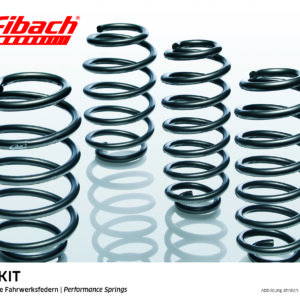
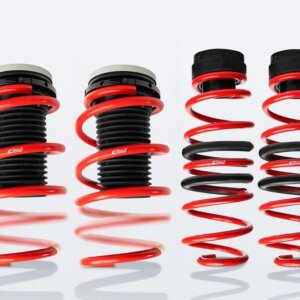
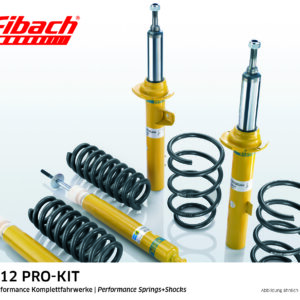
Lowering springs for lowering – Eibach Pro-Kit: the cheapest first step. It lowers the car for 20–30 mm, keeps the factory dampers, with TÜV certification. There are separate versions for the GTI and R because their axle weights differ – select your car in the finder. SportlinePLUS are height-adjustable springs, and the Eibach B12 is a kit of springs and Bilstein dampers for those who do not want coilovers.
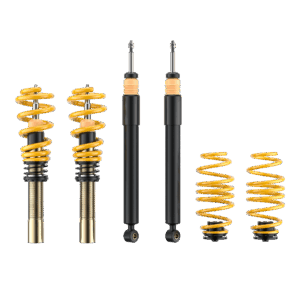
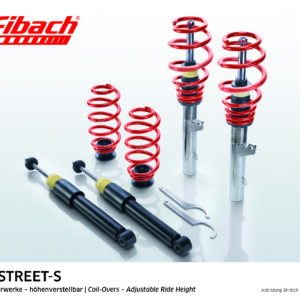
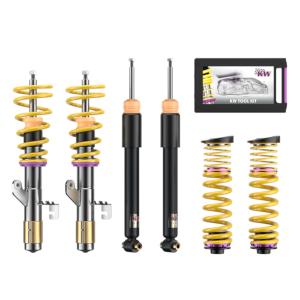
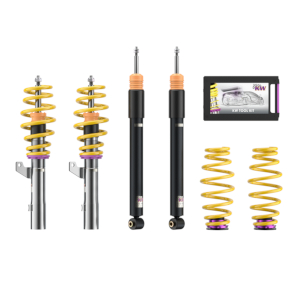
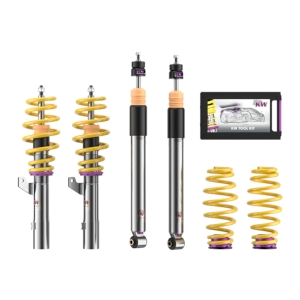
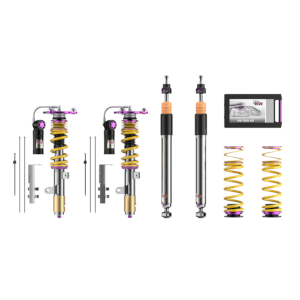
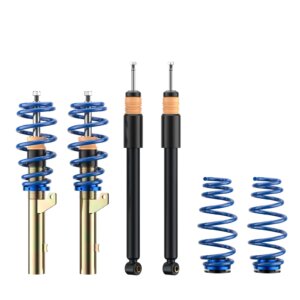
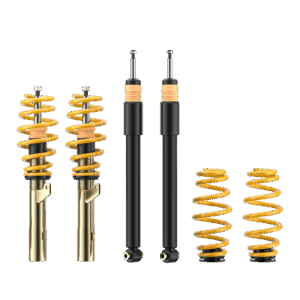
Coilovers (Gewinde) – ap, ST, KW, Eibach Pro-Street-S: you set the ride height yourself, and the damper is matched to the spring. ap is the most affordable serious entry point (under €700). ST X is KW technology at an affordable price and our choice for most road builds; the ST XA adds adjustable rebound, and the ST XTA plus 3 aluminium top mounts with camber adjustment as well. The KW V1 is the German benchmark for fit and forget, the V2 adds adjustable rebound, and the V3 separately adjustable rebound and compression for track days, and the V3 Clubsport is for a car that lives at the Nürburgring.
Have DCC? With coilovers a Golf 8 with adaptive suspension loses the electronic adjustment and throws a fault. Two routes: the KW DDC Plug & Play keeps the factory button and links it to its own dampers, while the Eibach Pro-Tronic is a delete kit that clears the fault with any coilovers.
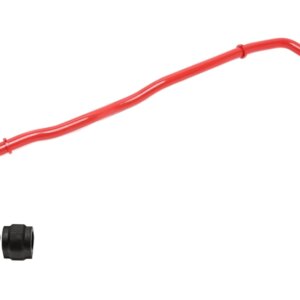
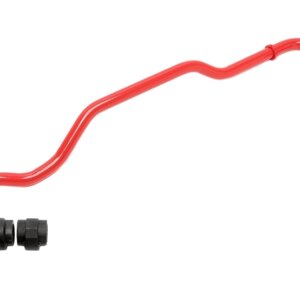
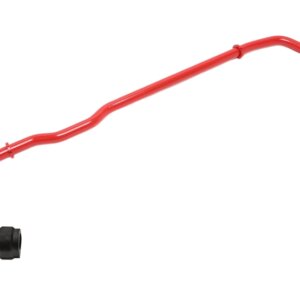
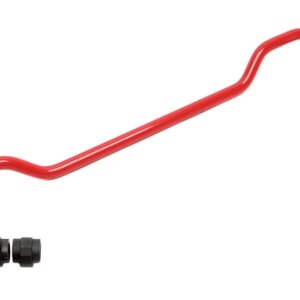
Anti-roll bars: the most noticeable addition for the money. An uprated front anti-roll bar calms body roll, and the rear one reduces understeer and makes the rear responsive. They go with any of the options above.
Wheel hop on the GTI: if the front wheels hop on a hard launch, the soft lower engine mount is to blame. We can supply a polyurethane insert for it to order – that is €50 that saves the driveshafts and gearbox.
➤ Our Tuners Capital line
We recommend: TC 2-way adjustable anti-roll bars
Our anti-roll bars are powder-coated and 2-way adjustable (two holes at the ends for a softer or sharper setting). For front-wheel drive (GTI, Clubsport, Octavia RS) the choice is front Ø26 mm and rear Ø24 mm, for 4Motion (R, S3 8Y, 4Drive) pa front Ø28 mm and rear Ø25 mm. Polyurethane bushes and clamps are included.
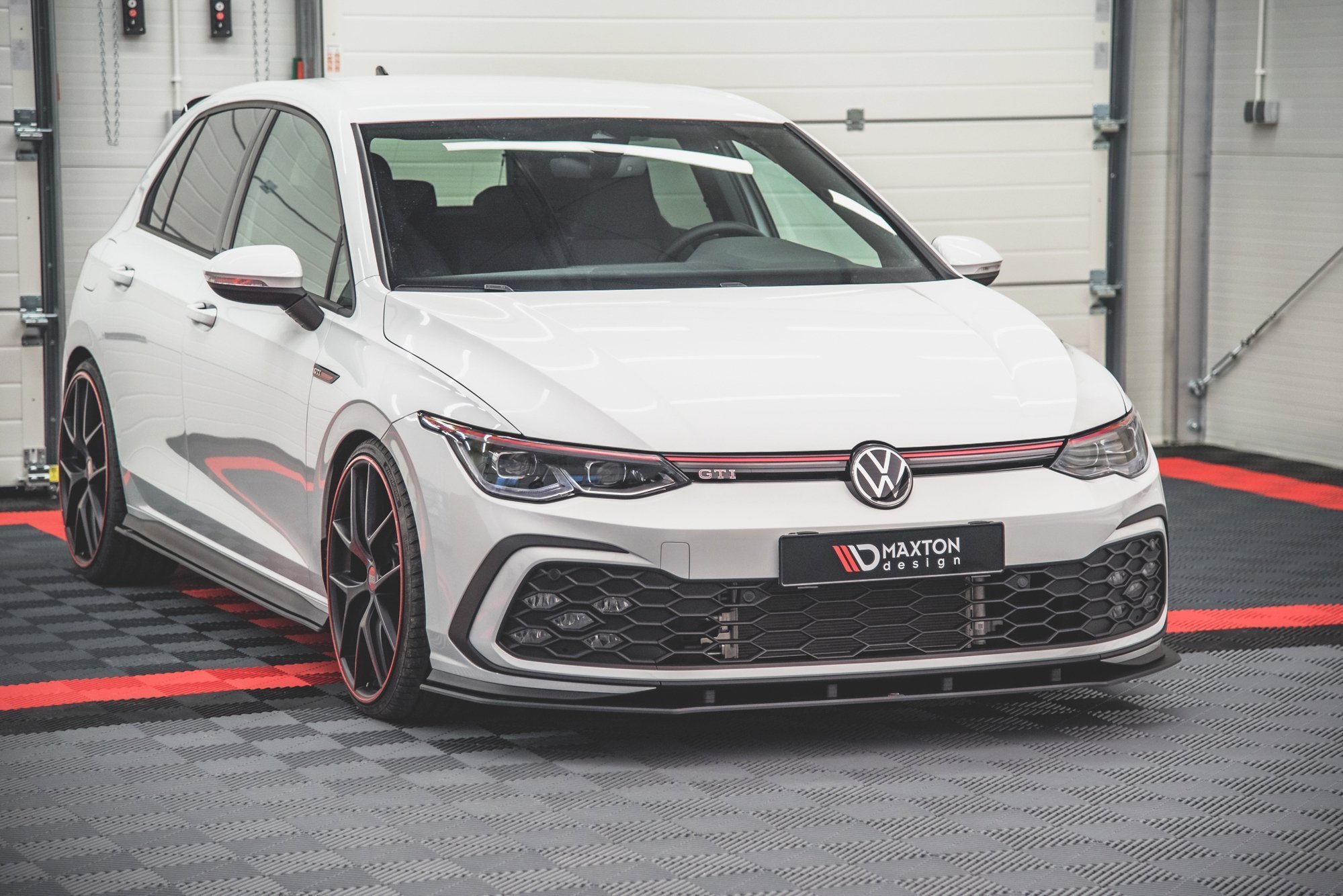
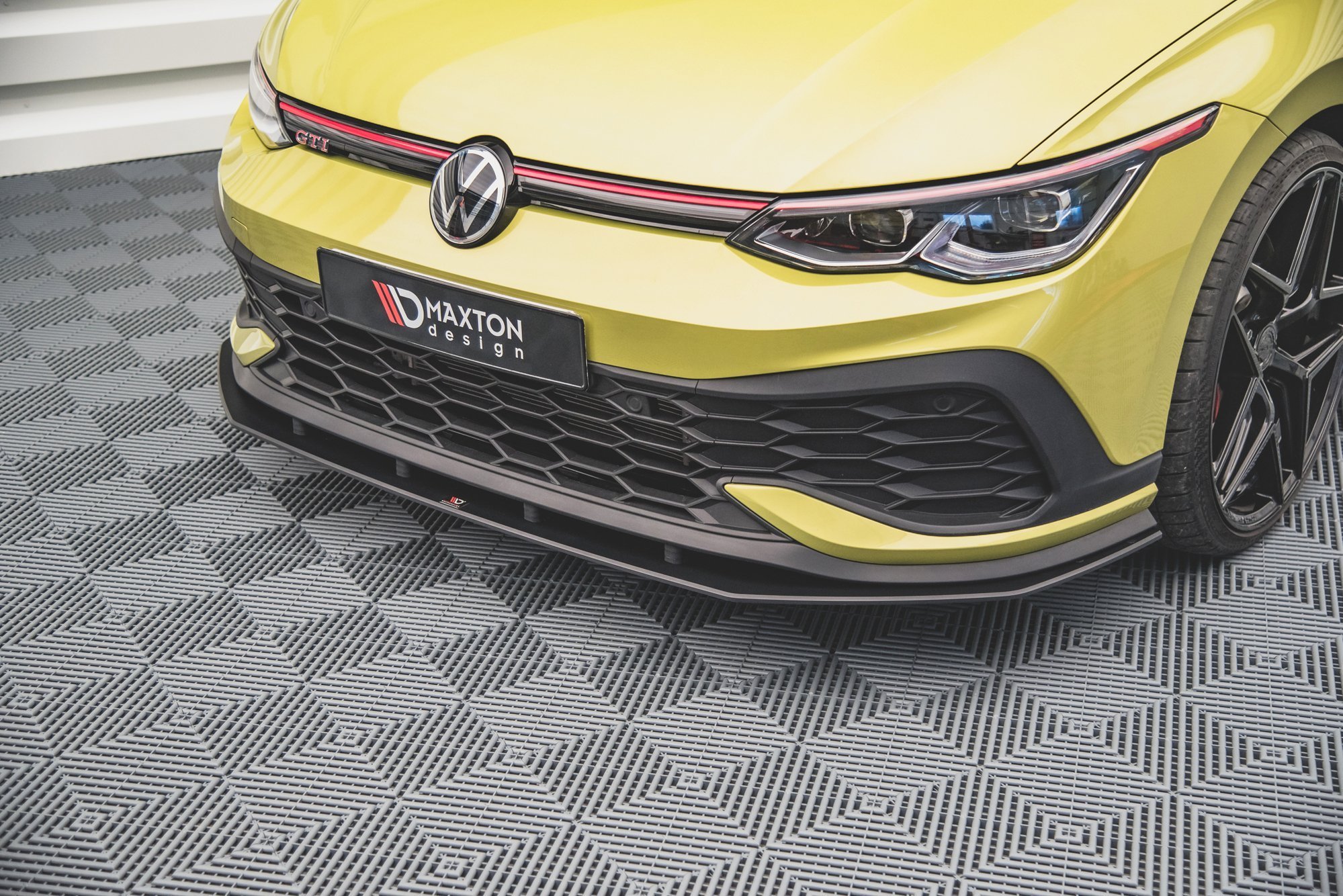
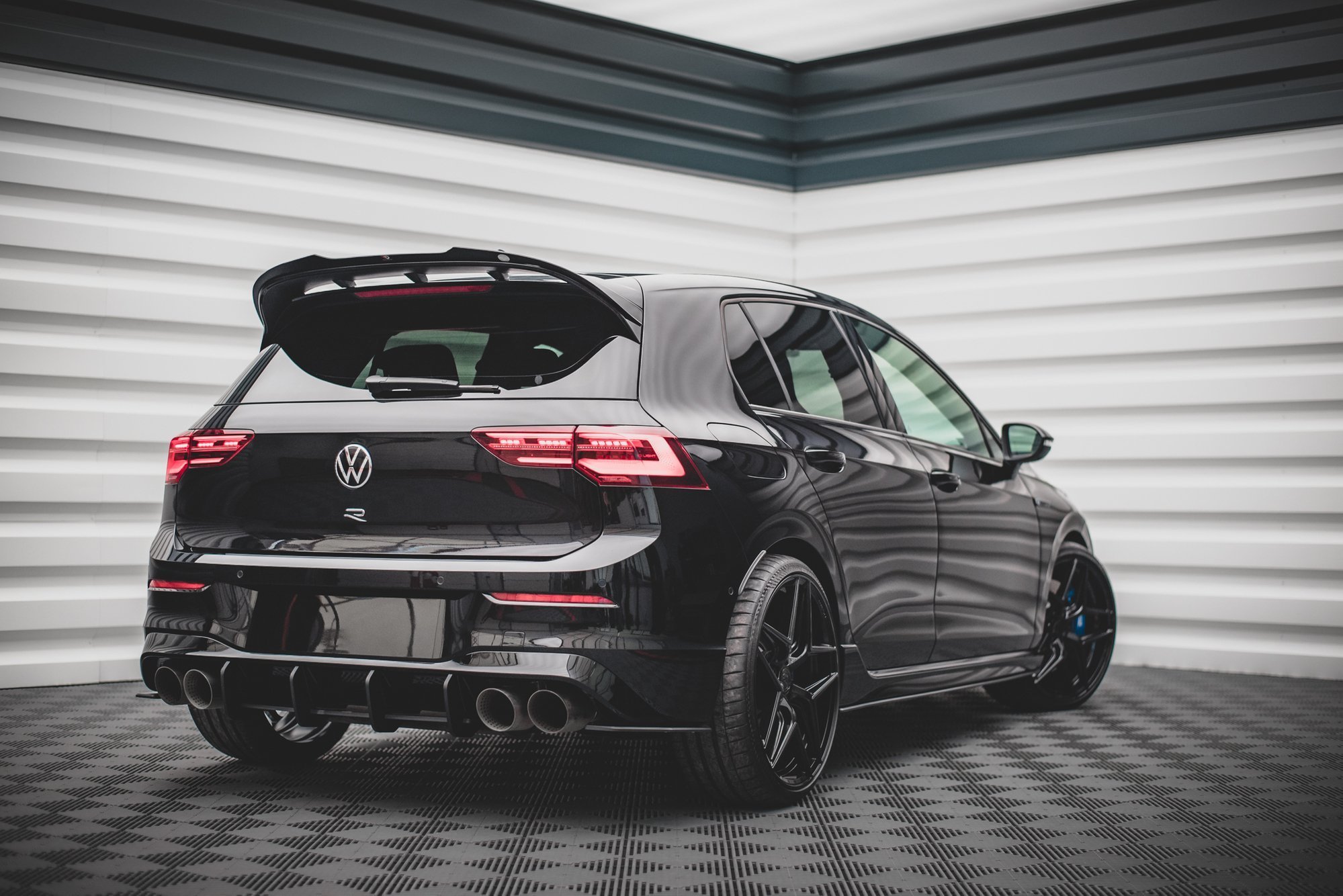
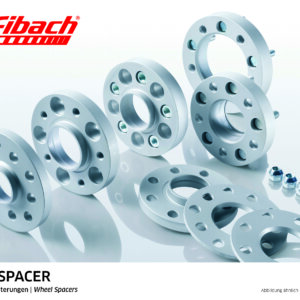
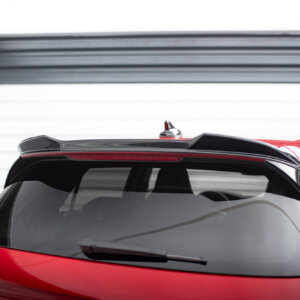
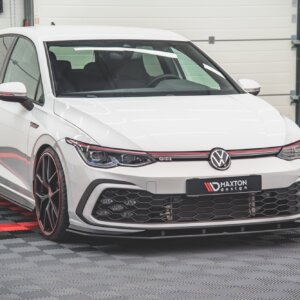
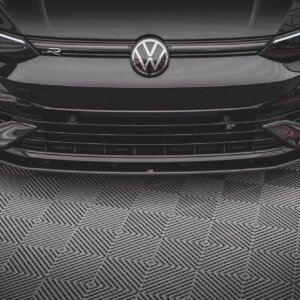
Looks: Maxton, spacers and wheels: Maxton Design covers the Golf 8 GTI, Clubsport and R with more than 150 items – splitters, side skirt extensions, diffusers, spoiler extensions, for pre-facelift and facelift. The Street Pro line is made of ABS with a matt black finish and stands up to everyday use. Eibach Pro-Spacer spacers 5×112 (15–25 mm) fill the arches and widen the track, which you also feel in corners. Before ordering, select your car so you only see the parts for your version.
Stopping
Brakes
More power means higher speeds before the corner, and after a few hard stops the factory brakes fade: the pedal goes soft and stopping distances grow. The GTI has 340 mm front discs, the Clubsport and R 357 mm – enough metal, but not enough pad and fluid. Upgrade the brakes in this order – every step makes sense on its own.
Recommended upgrades:
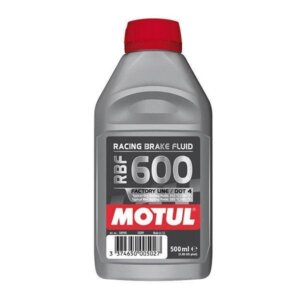
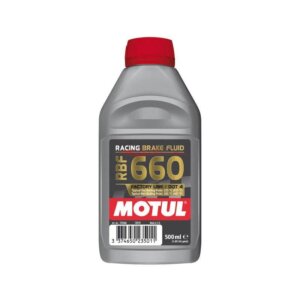
Brake fluid with a higher boiling point: Motul RBF 600 (boiling point 312 °C) or RBF 660 (325 °C). The cheapest change you will feel the most on track.
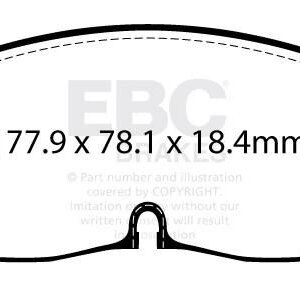
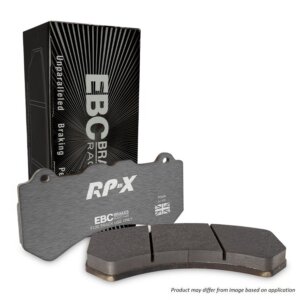
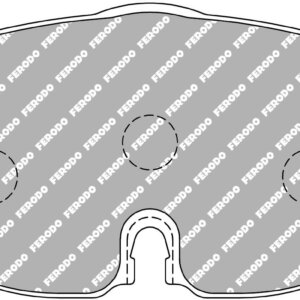
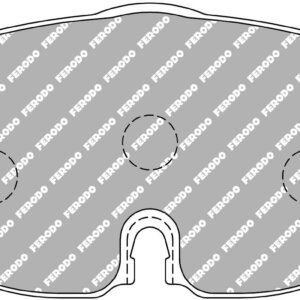
Performance brake pads: Ferodo DS2500 for the road and occasional track days (they work from cold), DS3.12 for serious track use. The EBC Yellowstuff is a road-and-track pad with more initial bite, while the RP-X is a racing pad.
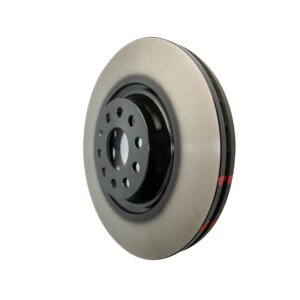
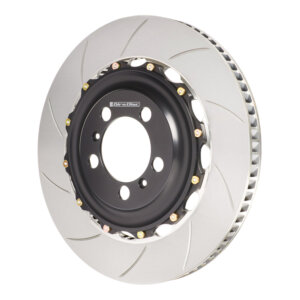
Brake discs: DBA one-piece, vented for the road, Girodisc and DBA two-piece for the track – lighter for 2–3 kg per wheel and more resistant to cracking.
Braided brake hoses: a stainless braid does not expand under pressure the way a rubber hose does, so the pedal stays firm and precise. For the Golf 8 we supply them to order.
Before ordering, select your car in the finder so you only see pads and discs for your brake size.
CONCLUSION
Golf 8 GTI / R tuning: final thoughts
The EA888 Gen4 is just as rewarding a platform as the Gen3 – with an unlocked ECU, an intercooler and a downpipe, the Golf 8 R is a 450 HP car you can still drive to work every day. The key is to approach tuning as a whole: power must not get ahead of cooling, gearbox, suspension and brakes. We hope this guide has helped you get to know the Gen4 platform better. If you need help or advice for your project, our team is always available. If you haven’t already, sign up for our newsletter using the form below – you will get more articles like this, plus upcoming car meets, track days and other events.
Subscribe
Join the TC crew — subscribe to our newsletter!
Thank you!
You have successfully joined our subscriber list.