
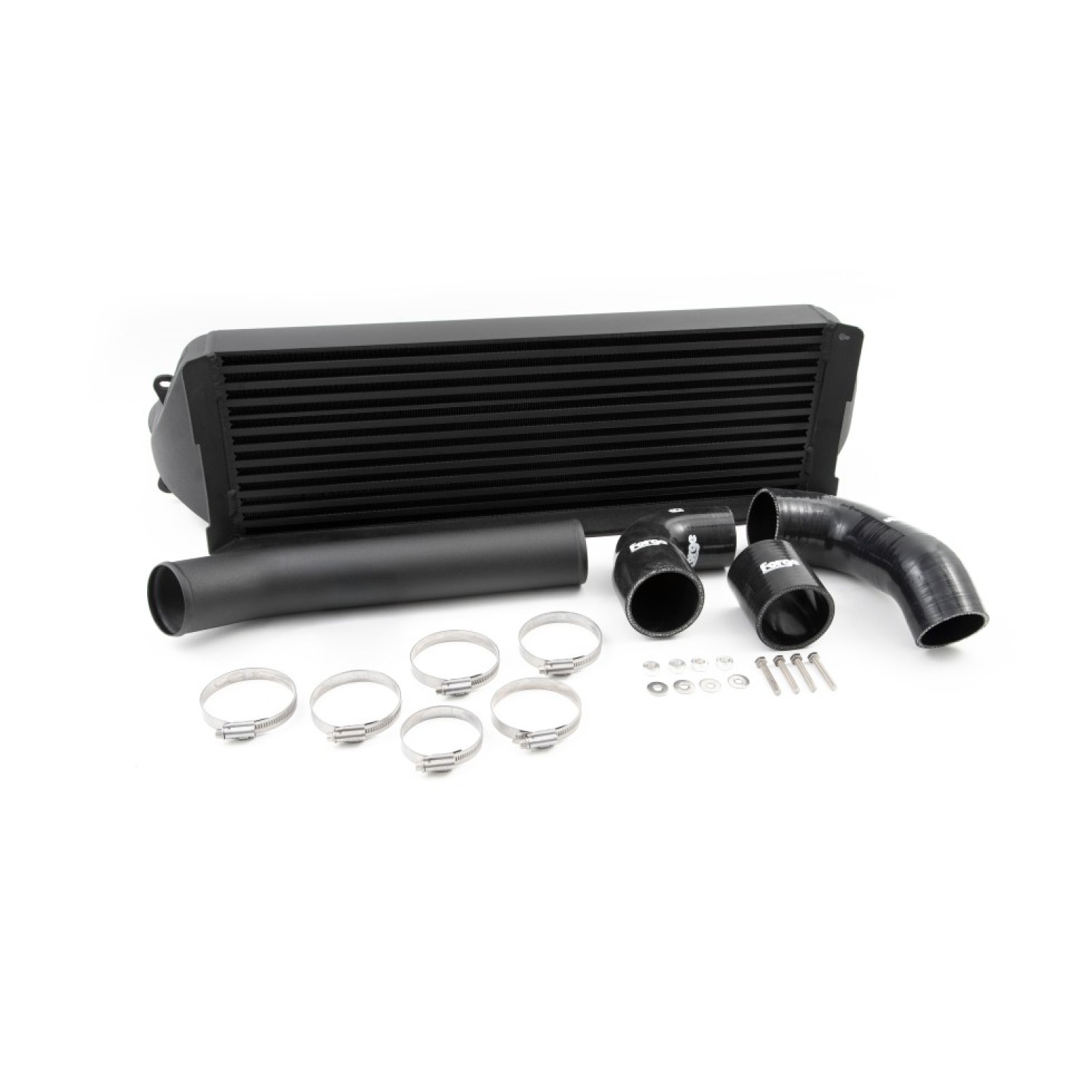
Following the success of our FMINT15 model for the Hyundai i30N MK3, the next step was to develop a solution for the facelifted MK3.5. With several design changes, direct fitment is now available for the latest version of the Hyundai i30N. Hyundai redesigned the turbocharger for this generation, which operates at higher boost pressure and allows greater flow than the previous version, making replacement of the more restrictive original intercooler with a larger Forge Motorsport model even more worthwhile. During testing with a Stage 2 ECU calibration, Forge intake system (FMINDK28) and turbo intake hose adapter (FMTIA10), the new intercooler achieved the expected results.
Dyno testing showed power increasing from 358 bhp with the original intercooler and intake system to 381.2 BHP, with 371.4 lb/ft of torque using the Forge Motorsport parts.
The Forge intercooler helps keep intake air temperature (IAT) at a safe level and prevents the original ECU from retarding ignition timing due to excessive temperatures, which causes power loss. If you use your Hyundai i30N for fast road driving or have a high-performance software tune in a hot climate, an intercooler like this is especially important.
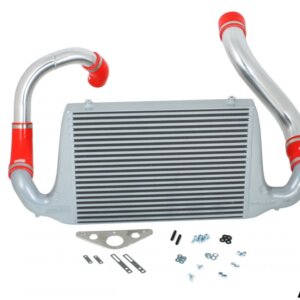
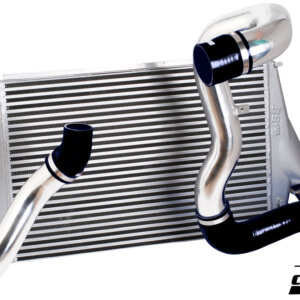
The bar-and-plate core was developed using Solidworks CAD and Computational Fluid Dynamics (CFD) flow simulations. The high-flow cast end tanks have an internal divider on the turbo side, ensuring efficient use of the entire volume of the stepped core.
Compared with the original intercooler, the core has 129% greater volume and more than 71% greater frontal area, making the Forge Motorsport intercooler one of the largest currently available. For the most efficient cooling possible, a purpose-built air-directing system is also integrated into the intercooler design.
The inlet and outlet diameter has been increased to 65 mm, providing 27% greater flow volume compared with the original intercooler. A special hard pipe is also included, with the diameter increased by 14 mm to 64 mm instead of the factory 50 mm. This pipe replaces the original hot-side pipe and provides suitable flow even at higher stages of tuning. The charge pipe and intercooler are protected with a standard black textured powder coating for greater durability.
During extensive testing, the vehicle was subjected to heat soak on the dyno until the radiator fans were cycling on and off. The intake temperature was then approximately 40 °C. Measurements taken from this point onwards were therefore more comparable and better reflected normal driving conditions. The Forge intercooler cooled significantly faster and provided a considerably greater temperature drop than the original intercooler.
After more than six dyno runs, the intake air temperature still remained at a very safe level. The Forge Motorsport intercooler reached 24 °C, half the 48 °C temperature measured with the original intercooler. Testing took place in relatively cool conditions, with a dyno-cell temperature of 15 °C, highlighting the limited efficiency of the original intercooler. During the summer months, the original intercooler combined with higher intake air temperatures can have a significant effect on engine performance. In these conditions, the ECU reduces ignition timing to prevent detonation, causing engine power to drop. With a vehicle running modified software, the effects can be even more pronounced, and premature engine wear is also possible.
Combined with the Forge intake system, a quality aftermarket cat-back exhaust system and the original software, this intercooler provides a very high level of performance. The final test results showed that, in addition to halving intake air temperature, the Forge Motorsport intercooler also significantly increased power and torque compared with Hyundai’s quoted figures of 275 bhp and 278 lb.ft of torque. The result achieved was 307 bhp and 347 lb.ft.
The Forge Motorsport front intercooler includes all the necessary fitting hardware for installation, which takes approximately 2.5 hours depending on the installer’s experience and the tools available.
Suitable for: Hyundai I30 III (PD), Hyundai Veloster II (JS).
Compatible vehicles (manufacturer data)
| Vehicle | Chassis | Years | Engine |
|---|---|---|---|
| Hyundai i30 | MK3.5 | 2021–2026 | — |
| Hyundai Veloster | — | 2021 | N (Facelift) |
Before ordering, check that the product matches your vehicle (model, year and engine). If in doubt, write to us — we will check for you.
Reviews
There are no reviews yet.