
Brake pads are the cheapest brake upgrade you can feel straight away – and the part most drivers get wrong. A race pad on a daily driver brakes worse than the standard pad on a cold winter morning, while a pad that is too soft starts to smell and fade after three laps of your first track day. In this guide we explain which performance brake pads are available, what the temperature window means, how to choose between road, “fast road” and track pads, and how to bed new pads in properly.
What happens when you press the brake pedal?
A brake pad converts the car’s kinetic energy into heat. When braking, the friction material rubs against the brake disc and leaves a thin layer of pad material on its surface. It is this layer – not just a “hard” pad – that determines how strongly and how evenly the car stops.
Every compound has a temperature window in which friction stays stable. Below it the pad bites less; above it the brakes fade: the pedal gets long, braking becomes weak and the pad can glaze. Choosing the right pad is therefore mainly about choosing the right temperature window for the way you drive.
What brake pads are made of: organic, semi-metallic, ceramic
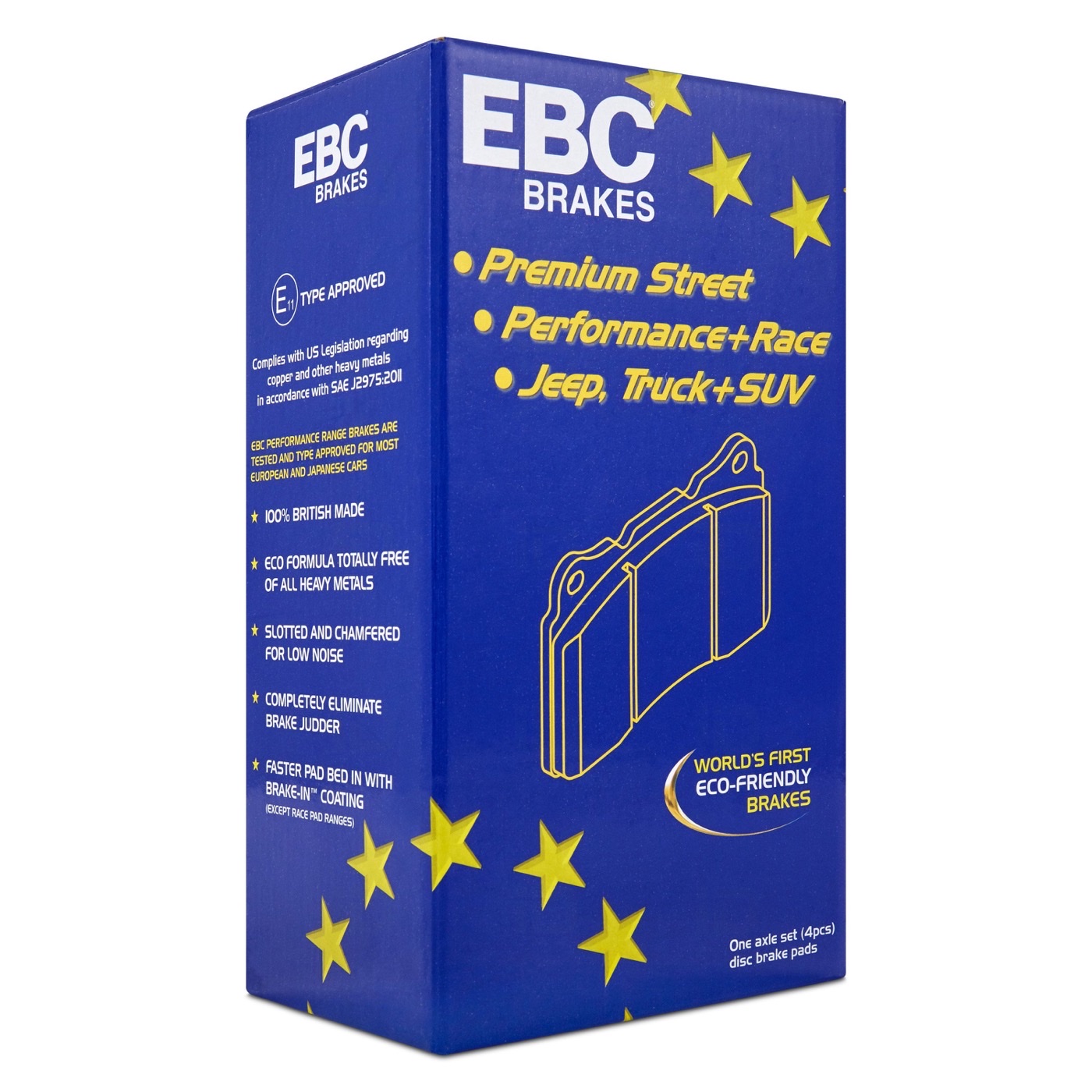
- Organic (NAO) compounds – softer, quiet and gentle on discs, with little dust. Suitable for everyday driving, but they fade sooner under heavy load. An example is EBC Ultimax, an organic pad without steel fibres designed as a direct replacement for the standard pad.
- Semi-metallic compounds – contain metal fibres, cope better with heat and give a stronger bite. The price is more dust, sometimes more noise and faster disc wear. Most sports and race pads lean this way.
- Ceramic compounds – ceramic particles and aramid fibres; very little light-coloured dust, quiet and smooth braking, long service life. An example is EBC Redstuff (aramid fibres with ceramic particles), designed for fast road cars where quietness and clean wheels matter.
Manufacturers often blend compounds today, so treat labels like “ceramic” or “semi-metallic” as a rough guide. The temperature window and intended use that the manufacturer lists for each pad are more useful.
Road, fast road or track performance brake pads – what is the difference?
Road pads (standard replacement)
They work as soon as you pull out of the driveway, even below freezing. They are quiet, produce little dust and are kind to discs. At EBC these are Ultimax and Greenstuff (Greenstuff is the first step up from standard pads); at DBA it is the SS (Street Series). For most cars driven in town and on the motorway, this is the right choice.
Fast road pads
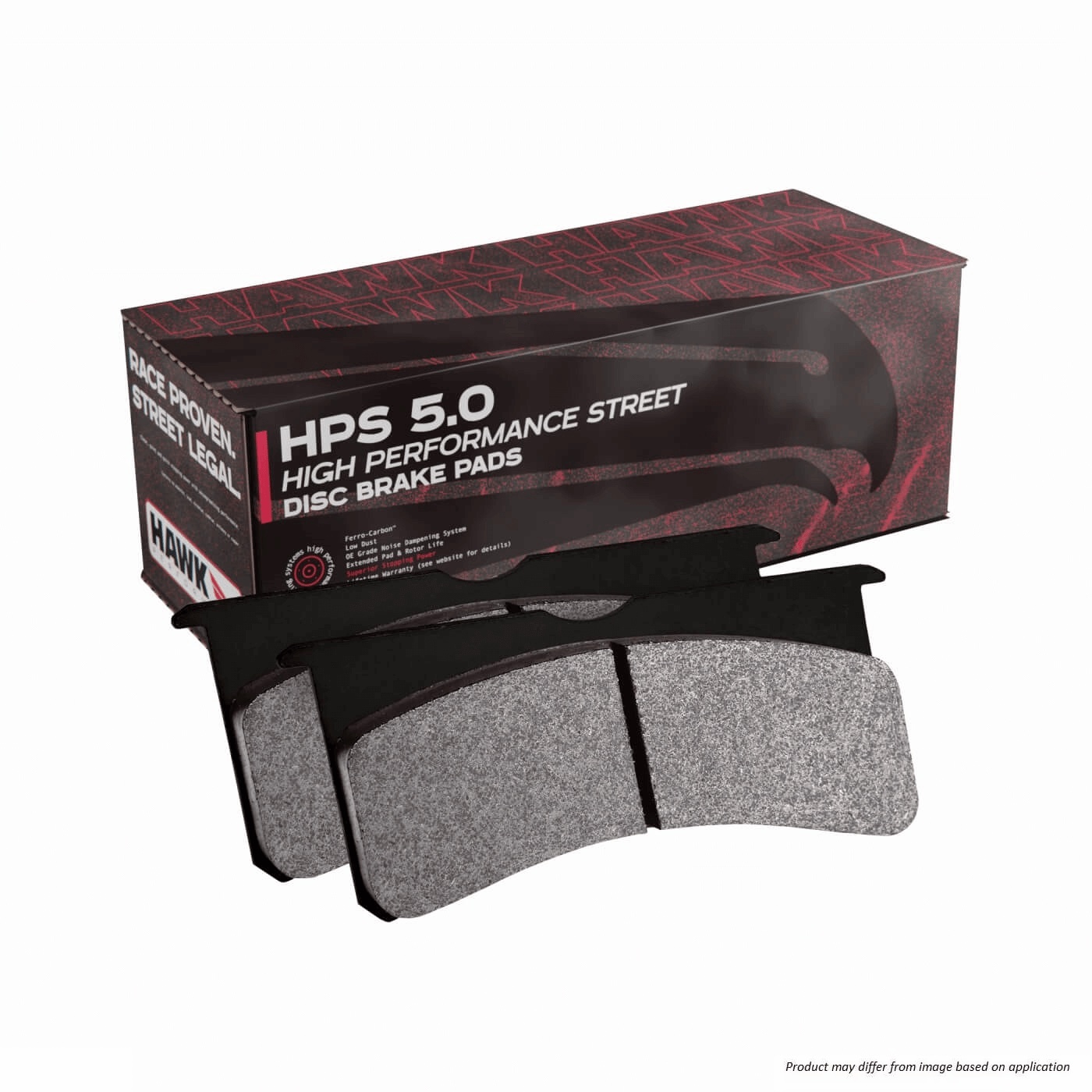
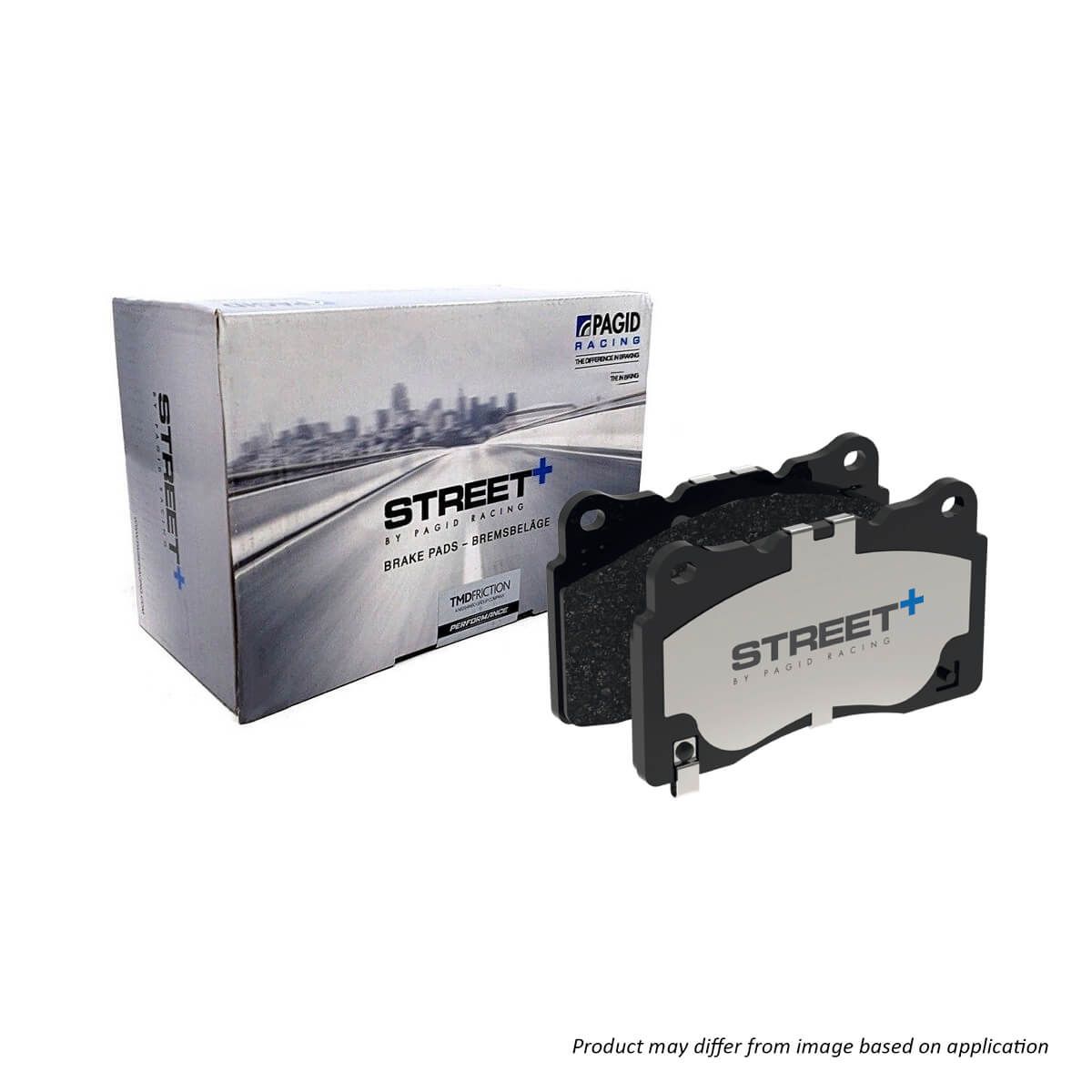
This is the category most owners of modified cars are looking for: a stronger initial bite, better heat resistance during spirited driving on mountain roads and the occasional track day, while still working properly from cold. It includes EBC Redstuff and Yellowstuff, Hawk HPS 5.0, Ferodo DS Performance, Pagid Street+ and DBA SP and XP.
Some manufacturer figures: Hawk lists an operating range of 37–400 °C for HPS 5.0, with 37–290 °C as optimal; EBC states a stable friction coefficient of 0.42 up to 450 °C for Yellowstuff and warns that it needs careful bedding-in before track use; Ferodo highlights a consistent pedal feel from cold for DS Performance.
Track (race) pads
They are made for high temperatures you almost never reach on the road. Hawk lists an operating range of 205–870 °C for DTC-60, with 370–595 °C as optimal – on a cold November morning such a pad is outside its window and brakes noticeably worse than the standard pad. Track pads are also noisier, dustier and wear discs faster. In between are hybrids such as Ferodo DS2500 (according to the manufacturer, a road and track pad with relatively little dust and noise) and EBC Bluestuff NDX, which has a high friction coefficient of 0.52 and good cold bite.
Rule of thumb: if you also drive the car on the road in winter, fit road or fast road pads. Keep track pads in the garage and swap them in before the circuit.
Comparison: which pads for which kind of driving
Prices are ranges for a single-axle set in our shop (October 2026, incl. VAT). The exact price depends on the car and pad size.
| Type | Temperature window | For whom | Examples and approximate price |
|---|---|---|---|
| Road (OE replacement) | from cold to moderate temperatures | everyday driving, town, motorway | EBC Ultimax mostly €68–101, DBA SS €90–103, EBC Greenstuff €96–136 |
| Fast road | from cold to ~300–450 °C (manufacturer data) | modified cars, spirited driving, occasional track day | EBC Redstuff €122–187, EBC Yellowstuff €138–201, Hawk HPS 5.0 €161–207, Ferodo DS Performance €136–193, Pagid Street+ €191–239 |
| Road/track hybrid | wider, with a high upper limit | regular track days, car also used on the road | EBC Bluestuff NDX €158–274, Ferodo DS2500 €181–270 |
| Track (race) | Hawk DTC-60: optimal 370–595 °C | track only, swapped before and after the circuit | Hawk DTC €254–382, Pagid RSL €315–501 |
For comparison: a set of front pads for a VW Golf/Audi TT costs €204 (Ferodo DS Performance), €206 (Ferodo DS2500) or €200 (Pagid Street+) in our shop. Always choose the right version for your car and brake system (each product lists compatible vehicles and the caliper manufacturer).
Dust, noise and disc wear – what is normal?
- Dust: more bite usually means more dust. Ceramic road pads are the cleanest, track pads the dirtiest. If black wheels bother you, a ceramic fast road compound is a good compromise.
- Noise: a slight hiss from sports pads is normal, loud squealing is not. Shims, chamfers and slots, clean guide surfaces and correct bedding-in all help. Track pads often squeal when cold – that is simply how they are.
- Discs: a more aggressive pad wears the disc faster. When replacing pads, check disc thickness (the MIN TH marking on the disc). When switching to a different compound, new discs are best, because the old layer of the previous pad interferes with bedding-in the new one. More on choosing discs in the article Drilled or slotted brake discs.
How to bed in new brake pads
Bedding-in creates an even layer of friction material on the disc. Without it, pads brake unevenly, can vibrate or glaze. Always follow the manufacturer’s instructions first – some pads (e.g. EBC Redstuff and Yellowstuff) have a special coating for faster bedding-in. General procedure:
- Find a safe stretch of road with no traffic.
- Make 8–10 moderate stops from about 80 to 20 km/h, without coming to a complete stop.
- Make another 2–3 harder stops from about 100 to 30 km/h.
- Drive a few kilometres with almost no braking to let the brakes cool.
- During and immediately after the procedure, do not hold the car stationary on the brake – a hot pad would imprint material onto the disc and cause vibration.
- Avoid extreme braking for the first few hundred kilometres. Bed in track pads before the first fast run of laps, not during it.
When to replace brake pads?
- Friction material thickness – most manufacturers specify replacement when a few millimetres remain (the exact figure is in the vehicle’s service data). For track use, start with fresher pads, as thin ones overheat faster.
- Wear warning – a warning light on the dashboard or the metallic squeal of the wear indicator.
- Vibration, longer pedal travel or pulling to one side – pads, discs, caliper or brake fluid may be to blame; check the whole system.
- Cracked, delaminated or glazed pads – replace them regardless of thickness.
Always replace pads in pairs on the same axle and never mix different compounds left and right. For race set-ups, manufacturers often recommend different compounds front and rear – Hawk, for example, lists DTC-60 front and DTC-30 rear for lighter cars.
Pads are not everything: fluid, lines and discs
A stronger pad means more heat throughout the system. On track, brake fluid often boils before the pad reaches its limits – the pedal suddenly goes soft. Before a track day, change to a fluid with a higher boiling point (more in the article Standard versus performance brake fluid, choice in the brake fluid category). Braided brake lines do not swell under pressure, so pedal feel is more precise. For your first visit to a circuit, we also recommend the checklist in the article How to prepare for your first track day.
Frequently asked questions
Are performance brake pads road legal?
For road use in the EU, brake linings must be approved to ECE R90. For many road and fast road pads this is stated in the product description (at EBC, for example, for Ultimax and Greenstuff, and for Bluestuff only for some versions). Race pads are generally not intended for road use. Check this for the product you choose.
Can I use performance pads in winter?
Road and fast road pads, yes – they are designed to work from low temperatures. Do not use race pads on the road in winter: they bite less when cold, which is exactly when you need the shortest stopping distance.
Do I need to replace the discs when changing pads?
Not always. If the discs are above minimum thickness, flat and free of cracks, they can stay. When switching to a different compound or if there is vibration, new discs are the best base for bedding-in.
Why do new pads squeal?
The most common causes are missing or old shims, dirty guide surfaces in the caliper, incorrect bedding-in or a track compound. A slight hiss from sports pads is normal; loud metallic squealing means the system needs checking.
Which pads do you recommend for a first track day?
For a car you drive to the circuit on the road and drive home again, a quality fast road or hybrid pad (e.g. Yellowstuff, Street+ or DS2500) together with fresh brake fluid is a good choice. Dedicated track pads pay off once you go on track regularly.
Which brake pads are right for your car?
You will find the full range in the Brake pads category – products can be filtered by brand and vehicle. If you are not sure which compound suits your driving, send us your car model, engine, current brakes and how you use the car via the contact form – we will advise which pads make sense for your goal and budget.
If you haven’t already, you can sign up for our newsletter using the form below. You can expect more articles like this in your inbox, plus other news from the car world, such as upcoming car meets, track days and other events.